Scotland's Isle of Mull and Small Isles Explorer Cruise
Enjoy an extraordinary voyage of seven nights exploring the Sound of Mull and the Small Isles. The Isle of Mull, inhabited since 6000 BC, is the quintessential island of the Inner Hebrides and rich in Scottish history. The outlying Small isles, Muck, Eigg, Rum and Canna, are justly famous for their sheltered anchorages, spectacular birdlife and ever-changing, island scenery. History, wildlife, spectacular islands and breathtaking mountains, this is a truly unforgettable Scottish cruise. Don't forget your hiking boots for stunning island walks!
Highlights
• Discover Oban
• Explore Loch Aline, Loch Drumbuie, Canna & Muck
• Visit Eigg, Rum, Tobermory & Loch Spelve
Some of the places we may visit are:
Oban: Your departure point will be Oban (Dunstaffnage Marina), the gateway to the Hebridean isles. After a short introduction to life on board our small ship we depart for our first destination.
Loch Aline: In the picturesque Loch Aline there are woodland walks and, at the head of the loch, is ancient Ardtornish estate and woodland gardens.
Loch Drumbuie: A squeeze between high sided cliffs and we are in a perfectly sheltered anchorage. A lovely location for going sea kayaking or for a swim.
Canna, the Small Isles: Canna is possibly the most beautiful of all the Small islands. Its 200 metre high cliffs of Compass Hill rise dramatically out of the sea and we have a good chance of seeing both sea and golden eagles. The anchorage on Canna is one of the best of the Small Isles and a stroll ashore to see the puffins and wild flower meadows of Sanday's Machair is a pure delight.
Muck, the Small Isles: The small island of Muck (Muck is Gaelic for 'Pig') is only a couple of miles long and a mile wide. Ashore there are wonderful coastal walks and many seabirds. On Horse Island, which is accessible at low water, there is a colony of puffins.
Eigg, the Small Isles: The "Sgurr of Eigg", an ancient, eroded volcanic plug that creates a dramatic cliff on the east side of the island and a high ridge which runs west. There are beautiful white-sand bays and a quartz beach that creates the famous "singing sands".
Rum, Loch Scresort, the Small Isles: Rum Island is a National Nature Reserve and famous for its herds of red deer and sheer sea cliffs which are home to nesting sea eagles. A visit to the Kinloch castle near the anchorage or a guided walk and talk with the ranger Trudi Clarke is definitely worthwhile.
Tobermory: One of the most picturesque towns in the Hebrides. If you wish, we can make time to visit the local distillery or visit eagles (Mull is the best place in the UK to see eagles).
Loch Spelve: A loch on the south side of Mull. To enter we have to negotiate the narrow entrance. The anchorage in this sheltered loch, which is surrounded by an ancient oak forest, gives us unparalleled views of the mountains of Mull. There are resident otters along its shoreline.
Please note that your voyage is weather dependent. Weather doesn't just mean good or bad weather. There are many considerations such as tidal gates, wind direction and strength, the strength and direction of currents, overfalls, and fetch. If you wish to visit a specific place or have a specific experience, such as fly fishing, sea eagle tours, whisky tasting, then please do let your skipper know and he will endeavour to meet your request.
|
Book now |
Twin Cabin
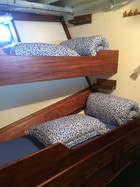
Twin Cabin En-suite
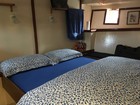
Double Cabin En-suite
|
Book now |
Twin Cabin
Twin Cabin En-suite
Double Cabin En-suite
|
Book now |
Single Cabin
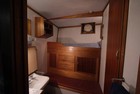
Twin Cabin Semi En-suite
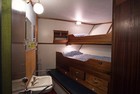
Double / Twin Cabin En-suite
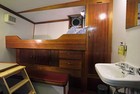
|
Book now |
Twin Cabin En-suite
Double Cabin adjacent En-suite
Double Cabin En-suite
|
Book now |
Twin Cabin
Twin Cabin En-suite
Double Cabin En-suite
|
Book now |
Single Cabin
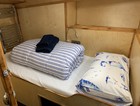
Twin Cabin
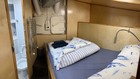
Single Cabin En-suite
Twin / Double Cabin En-suite
|
Book now |
Single Cabin
Twin Cabin Semi En-suite
Double / Twin Cabin En-suite
|
Book now |
Single Cabin
Twin Cabin Semi En-suite
Double / Twin Cabin En-suite
|
Book now |
Twin Cabin
Twin Cabin En-suite
Double Cabin En-suite
|
Book now |
Double Cabin adjacent En-suite
Twin Cabin En-suite
Double Cabin En-suite
|
Book now |
Twin Cabin
Twin Cabin En-suite
Double Cabin En-suite
|
Book now |
Single Cabin
Twin Cabin
Single Cabin En-suite
Twin / Double Cabin En-suite
|
Book now |
Twin Cabin
Twin Cabin En-suite
Double Cabin En-suite
|
Book now |
Double Cabin adjacent En-suite
Twin Cabin En-suite
Double Cabin En-suite
|
Book now |
Special Departure - Art Tutor Onboard
Single Cabin
Twin Cabin Semi En-suite
Double / Twin Cabin En-suite
|
Book now |
Twin Cabin
Twin Cabin En-suite
Double Cabin En-suite
|
Book now |
Single Cabin
Twin Cabin Semi En-suite
Double / Twin Cabin En-suite
|
Book now |
Single Cabin
Twin Cabin
Twin / Double Cabin En-suite
Single Cabin En-suite
|
Book now |
Double Cabin adjacent En-suite
Twin Cabin En-suite
Double Cabin En-suite
Vessel Type: Small Ship
Length: 72 feet / 21.9 meters
Passenger Capacity: 8
Built / refurbished: 1974 / 2020
Gemini Explorer delivers a markedly different small-ship experience: a 1974 Clyde-class cruising lifeboat rebuilt for charter work while retaining the character of her original role. The hull, engines and core structure remain true to the vessel that once served at Clovelly and took part in the 1979 Fastnet storm, but successive refits have added a bright saloon, a modern galley, high bulwarks, a viewing deck and en-suite cabins. The result is a functional, seaworthy platform with clear traces of its RNLI history, upgraded just enough to support comfortable coastal exploration without diluting the vessel’s working-boat identity.
Accommodation is compact but warm, with seven berths arranged between forward en-suite cabins and an aft twin sharing facilities with the crew. Life revolves around the deck saloon for dining and conversation, while the upper viewing deck offers the best vantage point for wildlife and landscape watching. Guests can bring their own gear, make use of the onboard two-person kayak, and settle into an informal routine shaped by a skipper who knows the Hebrides intimately and a chef who keeps meals local and fresh.


Vessel Type: Small Ship
Length: 24.9 metres
Passenger Capacity: 11
Seahorse II is an 82 ft steel-hulled vessel, originally built for the Norwegian fjords and high northern latitudes, combining rugged construction with modern comfort. Powered by a 350 hp Volvo diesel, she reaches speeds up to 11 knots and carries ample fuel and water for extended cruising. Her size allows access to remote islands and lochs of the Inner and Outer Hebrides that larger vessels cannot reach. Outdoor spaces include a high foredeck for wildlife spotting, a spacious aft deck for alfresco dining, and room for personal watercraft, kayaks, or paddleboards, supported by a crane for easy launching.
Accommodation is for up to 11 guests across a mix of double, twin, and single cabins, all with washbasins, and includes a deck saloon for dining and socialising with views of the surrounding wildlife. The three-person crew consists of a skipper knowledgeable about the local waters, a chef preparing fresh, locally sourced meals, and a bosun/crew member providing assistance as needed. Seahorse II delivers an intimate, flexible, and immersive experience for exploring the Hebrides in comfort and style.


Vessel Type: ex-Norwegian Rescue Ship
Length: 75 feet / 22.9 meters
Passenger Capacity: 8
Built/refurbished: 1969/1994
Speideren is a 75 ft ex-Norwegian Rescue Ship, originally built in 1969 for the Norwegian Society for Sea Rescue. Designed to handle the harsh and unpredictable North and Arctic Seas, she features a sturdy hull, deep keel, strong superstructure, and twin engines. Since her decommissioning, she has been converted into a fast, comfortable, and luxurious cruising vessel with a well-lit deck saloon, en-suite cabins, and a viewing deck, making her ideal for exploring the remote inlets and lochs of Scotland’s Wild Isles, including as far as St Kilda. Her decks provide ample space for wildlife observation, kayaking, and paddleboarding, with an onboard tender to safely reach shore.
Accommodation aboard Speideren is for eight guests in four forward cabins—three double and one twin—all en-suite and fitted with traditional varnished hardwood and soft antique lighting. Two of the double cabins are particularly spacious, while the third double has an adjacent en-suite for solo use. The convivial saloon serves as the hub for dining and socialising. The experienced crew includes a skipper with extensive local knowledge, a chef preparing fresh, locally sourced meals, and a bosun/crew member assisting wherever needed, ensuring a seamless and immersive small-ship cruising experience.


Vessel Type: Small Ship
Length: 16.4 metres
Passenger Capacity: 6
Built: 1973
St Hilda is a 54ft wooden ketch with deep Scottish heritage, originally built in 1973 for sail training and later converted for small-group cruising. Designed by G.L. Watson and constructed by the Millers boatyard, she combines traditional craftsmanship with functional cruising upgrades. While capable under sail, St Hilda usually relies on her quiet 112 HP Kelvin engine to meet busy itineraries along the Hebrides’ coast and islands.
Accommodation is compact but comfortable, with six guest berths arranged as a forward double en-suite, a twin en-suite, and a twin cabin near shared facilities. The well-lit deck saloon is the hub for dining and socialising, maintaining the convivial atmosphere of a traditional sailing vessel. Large, secure outdoor decks provide space for wildlife observation, relaxation, and personal watercraft like kayaks or paddleboards, including the ship’s inflatable sea kayak. The crew consists of a skilled skipper familiar with the Hebrides and a chef providing fresh, locally sourced meals.


Inclusions
• Voyage on board in selected cabin category
• All meals while on board
• Fruit on board
• Continental lager and house wine with pre-dinner aperitif and evening meal
• Cruises with wildlife guide
• BYO is welcome
Exclusions
• International and domestic flights
• Passport and visa costs where applicable
• Travel Insurance
• Beverages purchased on board
• Transfers


 Small Ship Cruise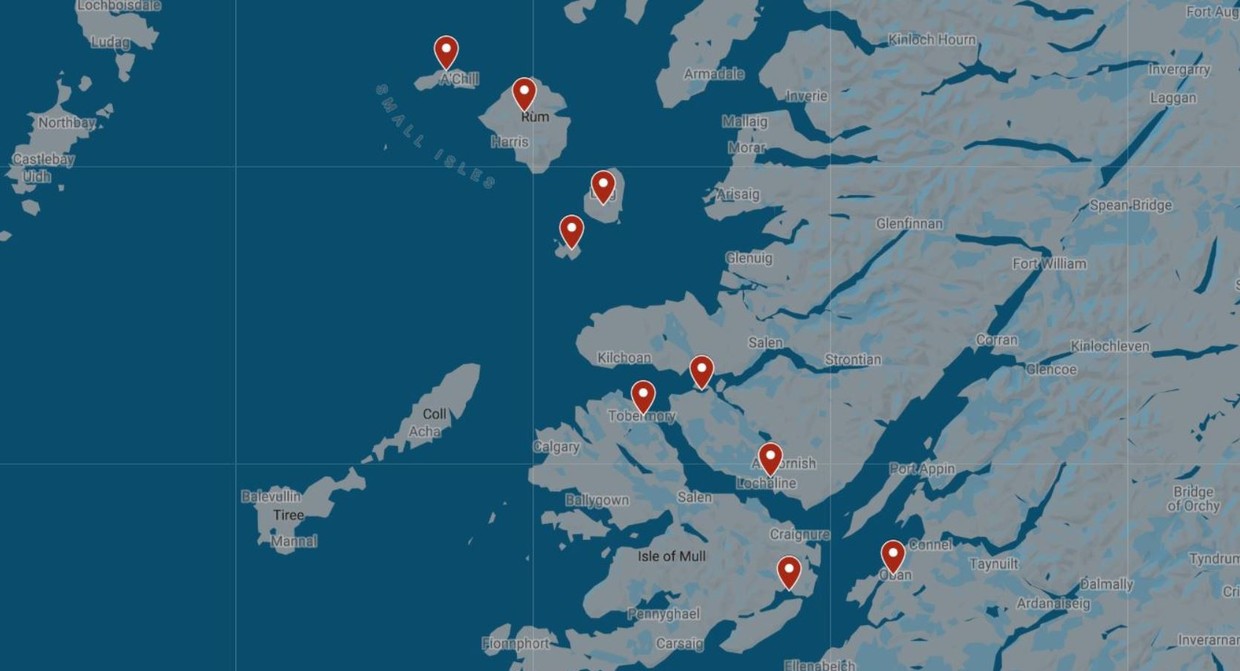
Our Associates Include


